
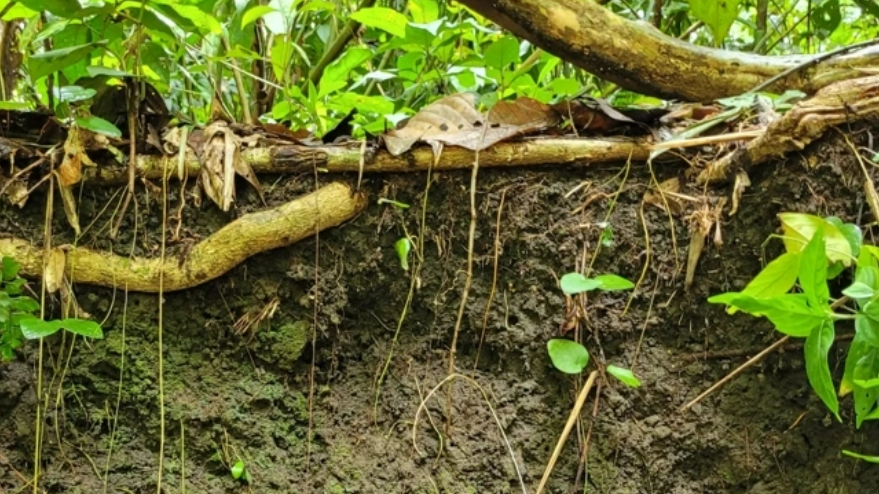
A type of soil known as Terras Pretas de Índio (TPI), which helped indigenous peoples thrive in the Amazon, may also be beneficial for maintaining the biome, according to a study by researchers at the University of São Paulo (USP).
TPI, a dark, fertile soil found in the Amazon rainforest, is not of natural origin—about 2,000 to 2,500 years ago, indigenous people took nutrient-poor lands and enriched them with materials like coal, clay, dung, and bone. The result was a substrate rich in magnesium, zinc, phosphorous, calcium and other minerals that occupies the river banks in the area and is used by the indigenous people for agriculture.
Science, learning from traditional knowledge, has been experimenting with this type of soil, and the results show that the material can facilitate the restoration of degraded areas or areas converted to pasture areas. However, says Tsai Siu Mui, a professor at USP, “TPI has taken thousands of years to build up and would take the same amount of time to regenerate if used.” She therefore suggests that “the TPI itself should not be used, but its properties, especially the microorganisms, should be replicated in future environmental restoration projects”.
USP scientists, along with researchers from Manaus, conducted experiments growing seeds in three sets of pots: one containing 20% TPI and 80% conventional soil; one with 100% TPI; Another is completely absent from the Dark Earth. Not only did some species grow six-fold in the presence of TPI, but the soil at the end of the experiment contained a much greater diversity of microorganisms and provided more nutrients.
“Microbes convert soil particles into nutrients that can be absorbed by plants,” explains Anderson Santos de Freitas, the molecular biologist who led the study, which is why their presence is critical to plant growth.
The study also showed that some species, such as Embaúba – one of the first to repopulate degraded areas – are not even able to thrive in soils lacking TPI. Therefore, resorting to an outdated technology could be one of the keys to reversing the current damage caused by fires and deforestation.
source: Frontiers in soil science via: Science alert

Andrea Hargraves is a contributor to Brytfmonline.com, covering a broad range of topics including news, politics, business, technology, sports, entertainment, and lifestyle. She is committed to delivering clear, accurate, and reader-focused reporting that helps audiences stay informed about current events and emerging developments. Andrea’s work emphasizes useful information, balanced coverage, and stories that matter to everyday readers, making complex topics accessible and relevant to a wide audience.